Freelancer Service Agreements: 5 Essential Clauses to Protect Your Payment
Published Date:
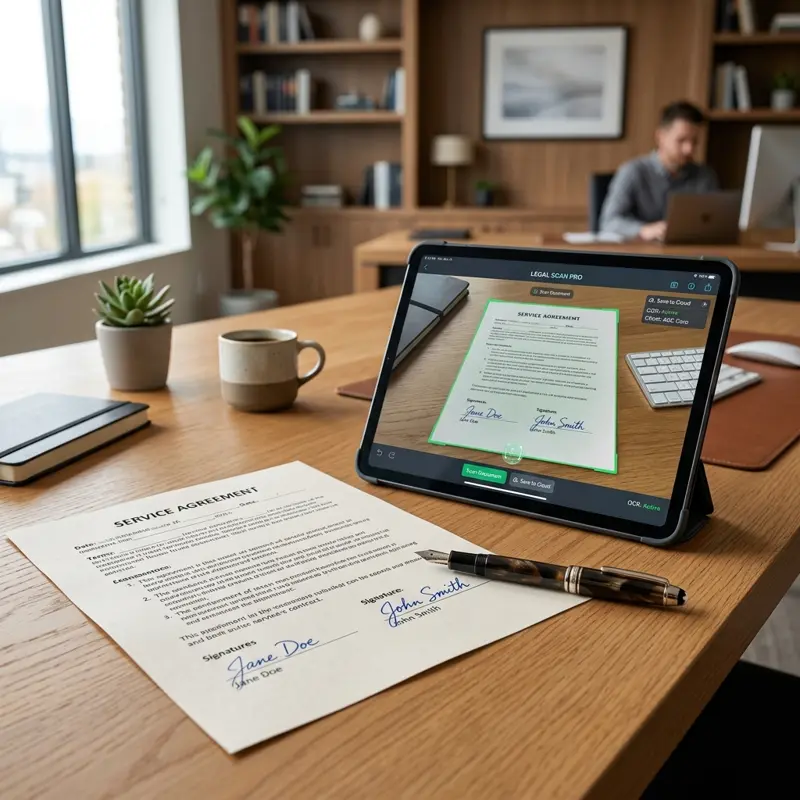
As a freelancer or independent contractor, landing a new, high-paying client is an incredibly exciting moment. However, letting that excitement push you into starting work without a solid, legally binding contract is the single biggest financial risk you can take in your business. A clear service agreement does much more than just make you look professional; it protects your valuable time, establishes firm boundaries, prevents legal disputes, and, above all, ensures you actually get paid for the work you deliver.
Unfortunately, many freelancers rely on verbal agreements, casual email threads, or generic templates downloaded from the internet without understanding the legal jargon they contain. This leaves them entirely vulnerable to endless revision requests, delayed payments, or clients outright stealing their intellectual property. To bulletproof your freelance business, here are the top 5 essential contract clauses you must include in every service agreement, curated by our AI legal document analyzer Kalkan.
The Danger of Working Without a Solid Contract
When you operate without a bespoke contract, you are operating entirely on trust. While trust is important in business, it does not pay the bills when a client suddenly experiences a budget cut or claims the work “wasn’t exactly what they envisioned.”
The most common disease in the freelance world is “Scope Creep.” This occurs when a client continues to ask for “just one more minor tweak” or “a quick additional feature” that was never discussed in the original project brief. Without a contract clearly defining the exact boundaries of the project, you have no legal ground to refuse these requests or charge extra for them. As a result, a project that was supposed to take 10 hours ends up taking 40 hours, effectively destroying your hourly rate and delaying your ability to take on new clients. A contract stops scope creep dead in its tracks. A well-structured contract also often works in tandem with legally binding NDA essentials to protect both your methods and the client’s confidential data.
Step-by-Step Solution: The 5 Essential Clauses
Do not send your next invoice or start your next design draft until you have verified that your service agreement contains these five critical pillars.
Step 1: The Ironclad Scope of Work (SOW)
The Scope of Work is the beating heart of your contract. It defines exactly what you are doing, and, just as critically, what you are not doing.
- The Execution: Never use vague descriptions like “design a website.” You must be hyper-specific: “Design a 5-page WordPress website including a Homepage, About, Services, Blog, and Contact page. This includes up to two (2) rounds of minor visual revisions.”
- The Protection: You must include a boundary statement: “Any requests for work outside the scope detailed above, including additional pages or a third round of revisions, will require a separate Change Order and will be billed at the standard hourly rate of $100/hr.”
Step 2: Strict Payment Terms and Milestones
Never leave the payment date open-ended. If a contract simply says “Client will pay $5,000,” you might wait six months to see that money.
- The Execution: Outline the exact payment schedule using milestones. For large projects, never start without a deposit. A standard structure is: “50% non-refundable deposit due upon signing to commence work, 25% due upon delivery of the first draft, and 25% due prior to handing over the final, unwatermarked files.”
- Net Terms: Clearly state when invoices are due after they are sent. “Net 15” means the client has exactly 15 days to pay the invoice from the date it is issued.
Step 3: Late Fees and the Right to Suspend Work
A client ignoring your invoice is a massive breach of trust, but if your contract doesn’t penalize them for it, they have no incentive to pay you before they pay their other vendors.
- The Execution: Include a late fee clause: “Invoices unpaid past the Net 15 deadline will accrue a late fee of 1.5% per month (18% APR) on the outstanding balance.”
- The Protection: You also need a suspension clause: “Contractor reserves the right to immediately halt all active work and withhold final deliverables if any invoice is overdue by more than 7 days, without this constituting a breach of contract by the Contractor.”
Step 4: Intellectual Property (IP) Transfer Conditions
This is where many freelancers accidentally give away their leverage. Who legally owns the logo you designed or the code you wrote before the client pays for it?
- The Execution: Your contract must explicitly state: “The Contractor retains full, exclusive ownership of all intellectual property rights to the deliverables. These rights will only be transferred to the Client upon receipt of full and final payment.”
- The Protection: This means if a client tries to take your work and run without paying, they are actively committing copyright infringement by using it, giving you massive legal leverage to issue a takedown notice or sue for damages.
Step 5: The Termination Clause and Kill Fees
Sometimes, despite everyone’s best intentions, a client relationship turns toxic or a project gets permanently paused. You need a legally clean way to exit.
- The Execution: Define how either party can end the contract: “Either party may terminate this agreement at any time by providing 14 days written notice.”
- The Protection: You must include a “Kill Fee.” If the client cancels the project halfway through because they changed their mind, the Kill Fee ensures you are compensated for the time already spent. “Upon early termination by the Client, the Client shall pay for all hours worked and expenses incurred up to the date of termination, or retain the 50% upfront deposit, whichever is greater.”
Prevention: Avoiding Common Freelance Traps
A strong contract is your shield, but your daily business practices are your armor. Avoid these common legal traps to ensure your freelance business runs smoothly.
- The “Start Now, Sign Later” Trap: Clients in a rush will often say, “We need this by Friday, just start working and we’ll get the contract sorted by HR next week.” Do not do this. If you start working without a signed contract, you have zero leverage. Reply politely: “I am ready to begin immediately as soon as the signed contract and upfront deposit are received.”
- Relying Only on Emails: While emails can sometimes serve as a binding agreement in small claims court, they are messy and open to interpretation. Always consolidate email agreements into a single, signed PDF document.
- Reading the Client’s Contract: If a corporate client insists you sign their standard vendor agreement instead of yours, you must read it meticulously. Look out for terms of service red flags, such as clauses that claim ownership of your pre-existing tools, or clauses that force you to indemnify the client for massive, uncapped damages.
When to Seek More Help or Watch for Edge Cases
If you are a freelancer working with international clients across borders, your standard local contract may not fully protect you.
Enforcing a contract across international borders is notoriously difficult and incredibly expensive. If a client in Germany refuses to pay a freelancer in the United States, hiring an international lawyer to chase a $3,000 invoice is not financially viable. In these edge cases, your best protection is not the threat of a lawsuit, but your payment structure. For high-risk international clients, demand 100% of the payment upfront, or use an escrow service (like Upwork or a dedicated B2B escrow platform) that holds the client’s money securely before you begin working. Additionally, ensure your contract specifies the “Governing Law” (e.g., “This contract shall be governed by the laws of the State of New York”) so if a dispute does occur, you dictate which legal system applies.
Quick Summary
- Verbal agreements are dangerous: Always operate with a written, signed contract to prevent scope creep and non-payment.
- Define the Scope of Work: Be painfully specific about exactly what you will deliver and limit the number of free revisions.
- Set clear milestones: Never work without an upfront deposit, and clearly state your Net payment terms (e.g., Net 15).
- Penalize late payments: Include interest fees for late invoices and grant yourself the right to pause work if unpaid.
- Hold the IP hostage: State clearly that the client does not own the copyright to the work until the final invoice is paid in full.
- Include a Kill Fee: Ensure you get paid for the hours you have already worked if the client abruptly cancels the project.
Frequently Asked Questions
Can I use a digital signature for my freelance contracts?
Yes. Digital signatures are legally binding in almost all jurisdictions for standard B2B service agreements. Using a platform like DocuSign or Adobe Sign creates a legally recognized audit trail that is much safer than relying on a client typing their name in an email.
What should I do if a client refuses to sign my contract?
If a client refuses to sign a standard, fair service agreement, that is an immediate, massive red flag. It usually indicates they intend to push boundaries or avoid payment. You should professionally decline the project and walk away.
Do I need to hire a lawyer to write my freelance contract?
While hiring a lawyer to draft a bespoke template for your specific industry is the safest option, it is not strictly necessary for beginners. You can purchase highly vetted templates from reputable legal organizations. However, you should never blindly copy a template you found for free on a random blog.
How do I enforce a late fee if the client refuses to pay it?
Enforcing a late fee requires firmness. When the invoice is late, send a revised invoice with the late fee added. If they refuse to pay the fee but pay the principal amount, you must decide if fighting over a small fee is worth losing the client. However, having the clause in the contract acts as a powerful psychological deterrent against late payments in the first place.
Is an email legally binding as a contract?
In many jurisdictions, an email exchange where an offer is made and clearly accepted can constitute a legally binding contract. However, emails are often vague and lack critical clauses (like IP transfer or termination). Proving the terms of an email contract in court is much harder than pointing to a single, signed PDF document.
Analyze Your Freelancer Contracts Instantly with Kalkan!
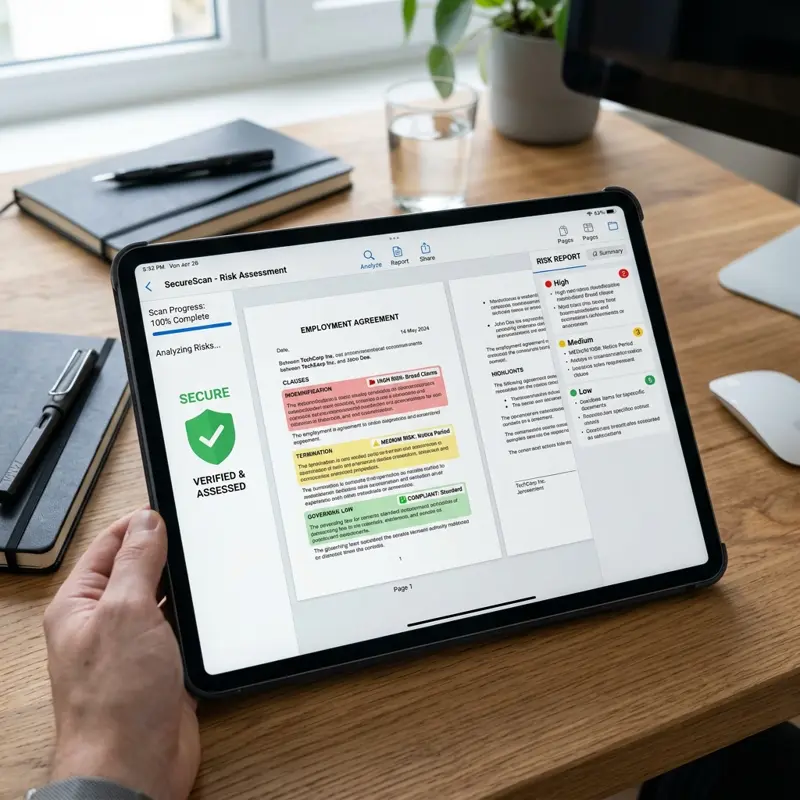
Before you sign your next freelance agreement, make sure you aren’t agreeing to risky terms. Download the Kalkan app. Kalkan’s AI-powered contract analysis tool scans PDF contracts, highlights unfavorable payment terms, flags liability risks, and suggests safe legal modifications. Download Kalkan App Now and protect your business!